Peach Blueberry Greek Yogurt Cake – Easy & Delicious
Peach and Blueberry Greek Yogurt Cake is about to become your new favorite way to sweeten your day. Imagin extracte this: a tender, moist cake, bursting with the vibrant flavors of sun-ripened peaches and juicy blueberries, all brought together with the delightful tang of Greek yogurt. This isn’t just any cake; it’s a celebration of simple, wholesome ingredients transformed into something truly special. People adore this Peach and Blueberry Greek Yogurt Cake because it’s incredibly easy to whip up, making it perfect for a quick breakfast treat, a delightful afternoon snack, or even a light dessert. The Greek yogurt doesn’t just add a wonderful creaminess and moisture; it also lends a subtle, sophisticated tang that beautifully balances the sweetness of the fruit, preventing it from being cloyingly rich. This cake is proof that you don’t need complex techniques or exotic ingredients to create a dessert that feels both comforting and a little bit elegant. Get ready to fall in love with its perfectly balanced flavors and incredibly satisfying texture.
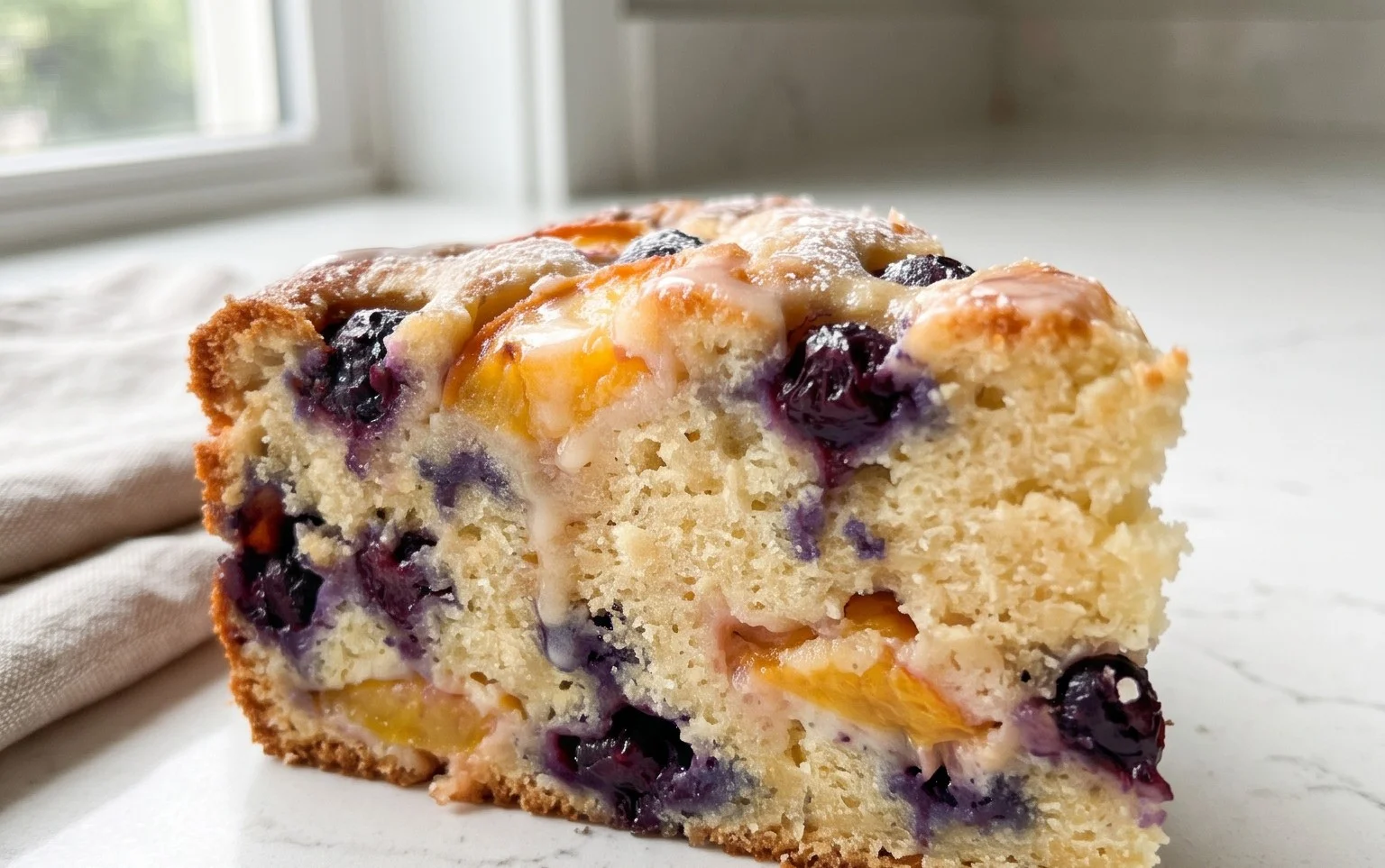
Peach and Blueberry Greek Yogurt Cake
This Peach and Blueberry Greek Yogurt Cake is a delightful treat that’s perfect for breakfast, brunch, or even a light dessert. The tang of Greek yogurt pairs beautifully with the sweetness of ripe peaches and juicy blueberries, creating a moist and flavorful cake that’s surprisingly easy to make. It’s the kind of cake that reminds you of summer afternoons, filled with sunshine and fresh fruit. The best part? It comes together with simple ingredients you likely already have in your pantry and fridge. Let’s get baking!
Ingredients:
Getting Started: Preparing Your Oven and Pan
Before we dive into mixing the batter, it’s essential to get our oven and baking pan ready. Preheat your oven to 350 degrees Fahrenheit (175 degrees Celsius). This ensures that the cake bakes evenly and develops a lovely golden-brown crust. While the oven is preheating, prepare your baking pan. I like to use a standard 8-inch or 9-inch round cake pan for this recipe. To prevent the cake from sticking, generously grease the pan with butter or non-stick cooking spray. Then, dust it with a bit of flour, tapping out any excess. This extra step guarantees that your beautiful cake will release from the pan with ease, keeping its shape intact. You can also line the bottom of the pan with parchment paper for added security.
Mixing the Dry Ingredients
In a medium-sized bowl, whisk together your dry ingredients: the all-purpose flour, baking powder, and baking soda. Baking powder is our primary leavening agent, giving the cake its rise, while baking soda reacts with the acidic components in the batter (like the yogurt) to provide an extra lift and a tender crum extractb. Whisking them together ensures they are evenly distributed throughout the flour, preventing pockets of unmixed leavening and leading to a more consistent cake texture. Set this bowl aside for now.
Creating the Creamy Batter
Now for the heart of our cake batter! In a large mixing bowl, cream together the softened butter and sugar. This is a crucial step for achieving a light and airy cake. Using an electric mixer (handheld or stand mixer) on medium speed, beat the butter and sugar until the mixture is pnon-alcoholic ale yellow and fluffy. This process incorporates air into the batter, which contributes significantly to the cake’s texture. Next, add the eggs one at a time, beating well after each addition. This allows the eggs to fully emulsify with the butter and sugar mixture. Follow with the vanilla extract and give it another good mix.
Incorporating the Wet and Dry Ingredients
Here’s where we bring everything together. To the creamed butter, sugar, and egg mixture, add the Greek yogurt. The Greek yogurt is key to this cake’s moistness and slight tang. It also acts as a binder and contributes to a tender crum extractb. Mix until just combined. Now, gradually add the dry ingredients to the wet ingredients. It’s best to add them in three parts, mixing on low speed after each addition, just until the flour streaks disappear. Be careful not to overmix at this stage. Overmixing can develop the gluten in the flour too much, resulting in a tough cake. A few small lumps of flour are perfectly fine.
Adding the Fruit and Baking
Gently fold in the sliced peaches and blueberries into the batter. You want to distribute them as evenly as possible without overworking the batter. The peaches will add pockets of juicy sweetness, and the blueberries will burst with flavor as they bake. Pour the batter into your prepared cake pan and spread it evenly. For an extra touch of sweetness and a lovely golden finish, sprinkle the top of the batter with the teaspoon of granulated sugar. This will caramelize slightly in the oven, creating a delightful crunchy topping.
Now, it’s time to bake! Place the cake pan in the preheated oven and bake for 30-40 minutes, or until a wooden skewer or toothpick inserted into the center comes out clean. The baking time can vary depending on your oven, so keep an eye on it. The cake should be golden brown around the edges and spring back lightly when gently touched.
Cooling and Serving
Once the cake is baked, remove it from the oven and let it cool in the pan on a wire rack for about 10-15 minutes. This allows the cake to set properly before you attempt to remove it from the pan. After this initial cooling period, carefully invert the cake onto the wire rack to cool completely. If you used parchment paper, you can peel it off now. Serving this cake warm is absolutely delightful, perhaps with a dollop of extra Greek yogurt or a light dusting of powdered sugar. It also keeps beautifully at room temperature for a couple of days, making it a fantastic make-ahead treat. Enjoy every delicious bite of your homemade Peach and Blueberry Greek Yogurt Cake!
Conclusion:
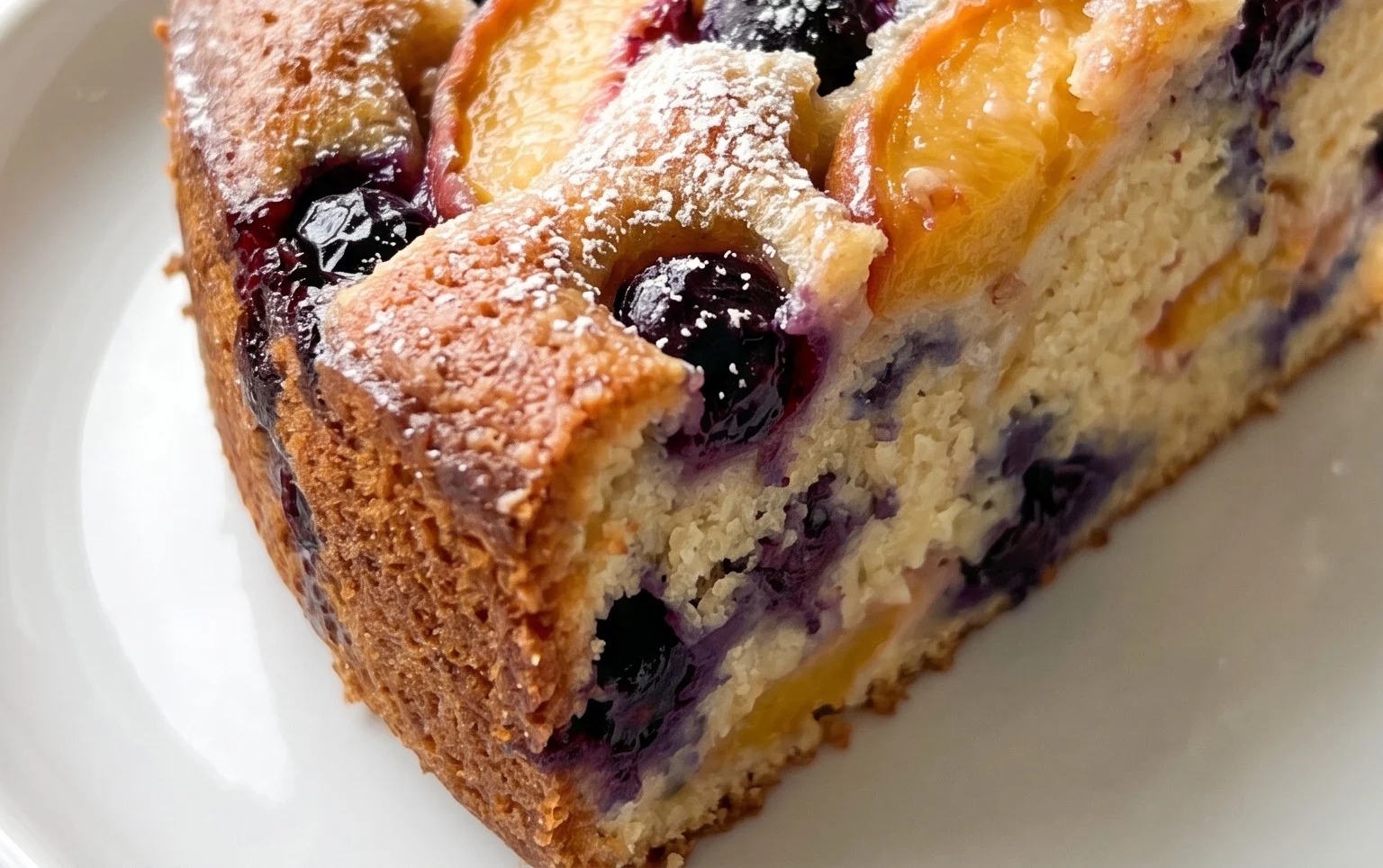
This Peach and Blueberry Greek Yogurt Cake is a truly delightful creation that I’m so excited for you to try! It perfectly balances the natural sweetness of ripe peaches and juicy blueberries with the tangy richness of Greek yogurt, resulting in a incredibly moist, tender crum extractb that’s a joy to bake and even more of a joy to eat. It’s surprisingly simple to whip up, making it an ideal treat for a leisurely weekend brunch, a light afternoon snack, or even a simple yet elegant dessert. The yogurt not only contributes to its wonderful texture but also adds a subtle, satisfying depth of flavor. I encourage you to embrace this recipe and experience its delicious charm for yourself!
For serving, this cake is fantastic on its own, allowing the fruit and yogurt flavors to shine. However, a dollop of extra Greek yogurt, a light drizzle of honey, or a sprinkle of toasted slivered almonds can elevate it further. If you’re feeling a bit more adventurous, consider a scattering of fresh mint leaves for a vibrant herbal note.
Don’t be afraid to experiment with variations! Feel free to swap the peaches for other stone fruits like plums or nectarines, or try different berry combinations. A touch of lemon zest folded into the batter can also add a lovely citrus brightness that complements the fruit beautifully.
Frequently Asked Questions:
Can I use regular yogurt instead of Greek yogurt?
While Greek yogurt is recommended for its thickness and tang, you can substitute regular plain yogurt. However, you might find the cake to be a bit less dense and possibly slightly more tart. To compensate for the thinner consistency of regular yogurt, you might consider draining it slightly through a cheesecloth-lined sieve for about 30 minutes before using.
My cake seems a little dense. What could I have done wrong?
A common reason for a dense cake is overmixing the batter once the flour is added. It’s important to mix just until the ingredients are combined. Overmixing develops the gluten in the flour, leading to a tougher, denser texture. Also, ensure your leavening agents (baking powder and/or baking soda) are fresh.
Peach and Blueberry Greek Yogurt Cake
A moist and flavorful cake bursting with fresh peaches and blueberries, enhanced by the tang of Greek yogurt.
Ingredients
-
1 1/2 cups all-purpose flour
-
1 teaspoon baking powder
-
1/2 teaspoon baking soda
-
4 oz butter (softened)
-
1 cup sugar
-
2 eggs
-
1/2 teaspoon vanilla
-
1/2 cup Greek yogurt (low-fat)
-
2 peaches (sliced into wedges)
-
6 oz blueberries
-
1 teaspoon granulated sugar
Instructions
-
Step 1
Preheat oven to 350°F (175°C). Grease and flour a 9-inch round cake pan. -
Step 2
In a medium bowl, whisk together flour, baking powder, and baking soda. -
Step 3
In a large bowl, cream together softened butter and sugar until light and fluffy. Beat in eggs one at a time, then stir in vanilla. -
Step 4
Gradually add the dry ingredients to the wet ingredients, alternating with the Greek yogurt, beginning and ending with the dry ingredients. Mix until just combined. -
Step 5
Gently fold in the blueberries. -
Step 6
Pour the batter into the prepared cake pan. Arrange the peach slices on top of the batter and sprinkle with the extra granulated sugar. -
Step 7
Bake for 35-45 minutes, or until a wooden skewer inserted into the center comes out clean. -
Step 8
Let the cake cool in the pan for 10 minutes before inverting it onto a wire rack to cool completely.
Important Information
Nutrition Facts (Per Serving)
It is important to consider this information as approximate and not to use it as definitive health advice.
Allergy Information
Please check ingredients for potential allergens and consult a health professional if in doubt.